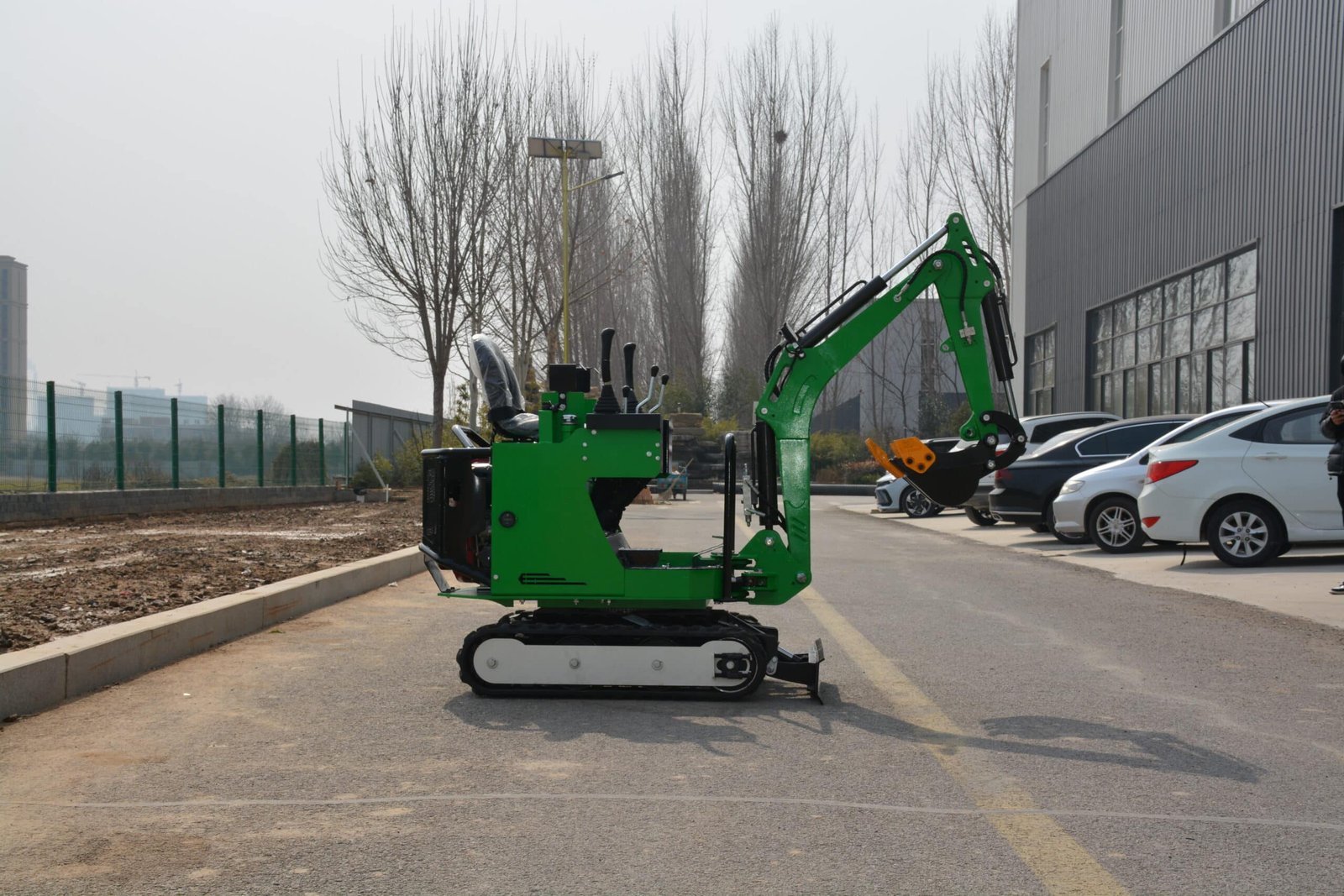
1. What “Narrow Space Work” Really Means on Real Job Sites
“Narrow space work” sounds simple, but on real job sites, it usually means pain.
It means:
- Backyard gates under 900 mm
- Indoor demolition with limited ceiling height
- Urban construction with no room to swing
- Greenhouses, farms, and vineyards
- Old residential areas where roads are barely wider than a car
In these places, access is the real problem, not digging power.
Contractors, farmers, and rental companies quickly learn one thing:
If the machine cannot enter the site easily, nothing else matters.
This is exactly where 1 ton mini excavators come in.
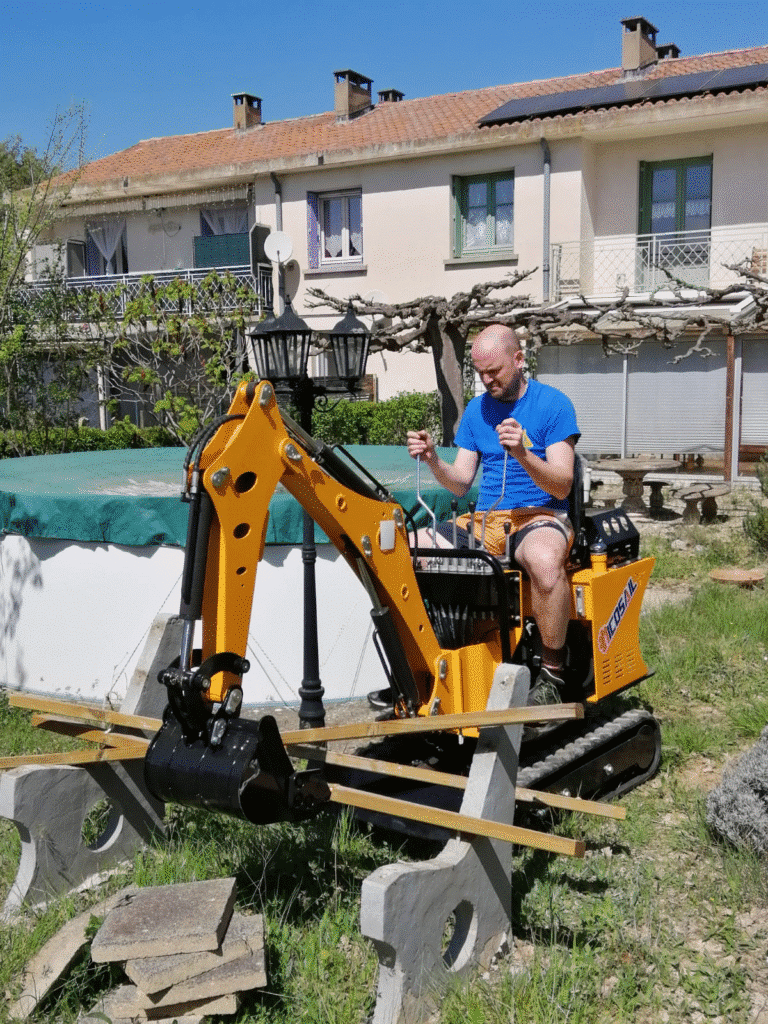
2. Why Big Machines Always Lose in Tight Areas
Many buyers think, “Bigger machine means faster work.”
That logic breaks down the moment space becomes limited.
Big excavators struggle with:
- Transporting into small sites
- Turning radius
- Excessive fuel consumption
- Damaging existing structures
- Overkill for light-duty jobs
Even a 2–3 ton excavator can feel clumsy inside a yard or between walls.
In narrow space work, precision beats power every single time.
3. What Exactly Is a 1 Ton Mini Excavator?
A 1 ton mini excavator usually means:
- Operating weight: around 800–1200 kg
- Machine width: often under 900 mm
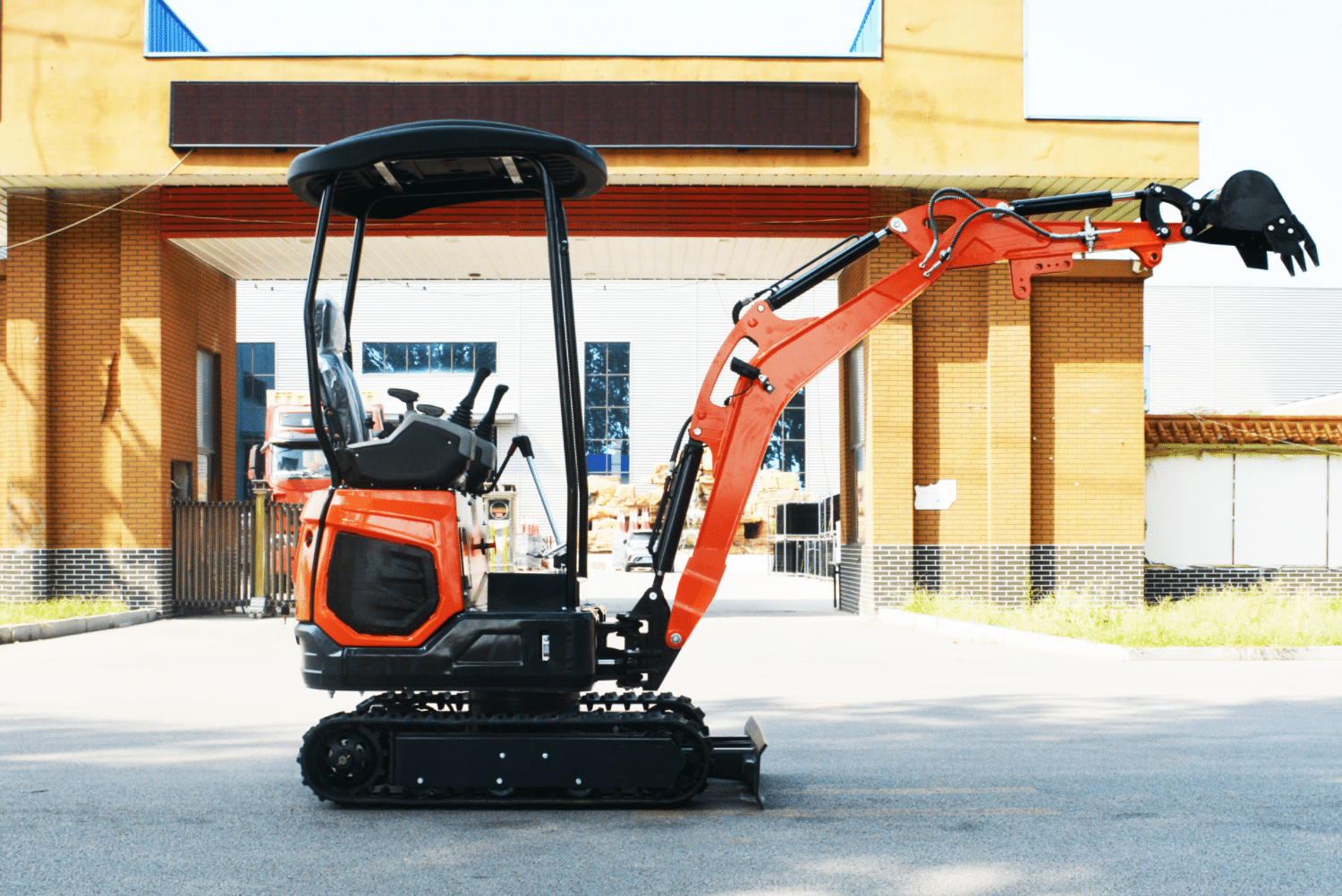
- Compact body and short tail swing
- Rubber tracks
- Small diesel or gasoline engine
It is designed to:
- Go through gates
- Work indoors or close to buildings
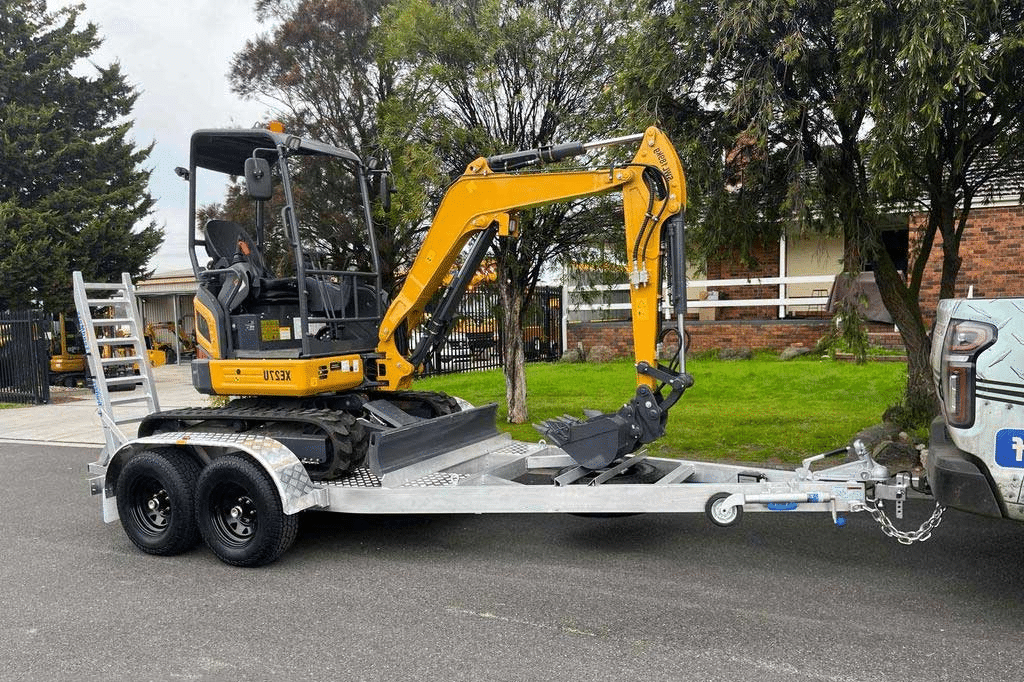
- Be transported on small trailers
- Be operated by one person easily
This size is not about replacing big machines.
It is about doing jobs that big machines simply cannot do.
4. The Real Reasons a 1 Ton Mini Excavator Fits Narrow Space Jobs Perfectly

4.1 Ultra-Compact Width = Easy Access
Many 1 ton mini excavators are designed to be narrower than a standard door.
That means:
- Backyard access without fence removal
- Indoor renovation jobs
- No need to break walls just to enter
For contractors, this saves time, money, and customer complaints.
4.2 Light Weight = Less Ground Damage
Heavy machines destroy lawns, tiles, and finished surfaces.
A 1 ton mini excavator:
- Applies less ground pressure
- Is safer on soft soil
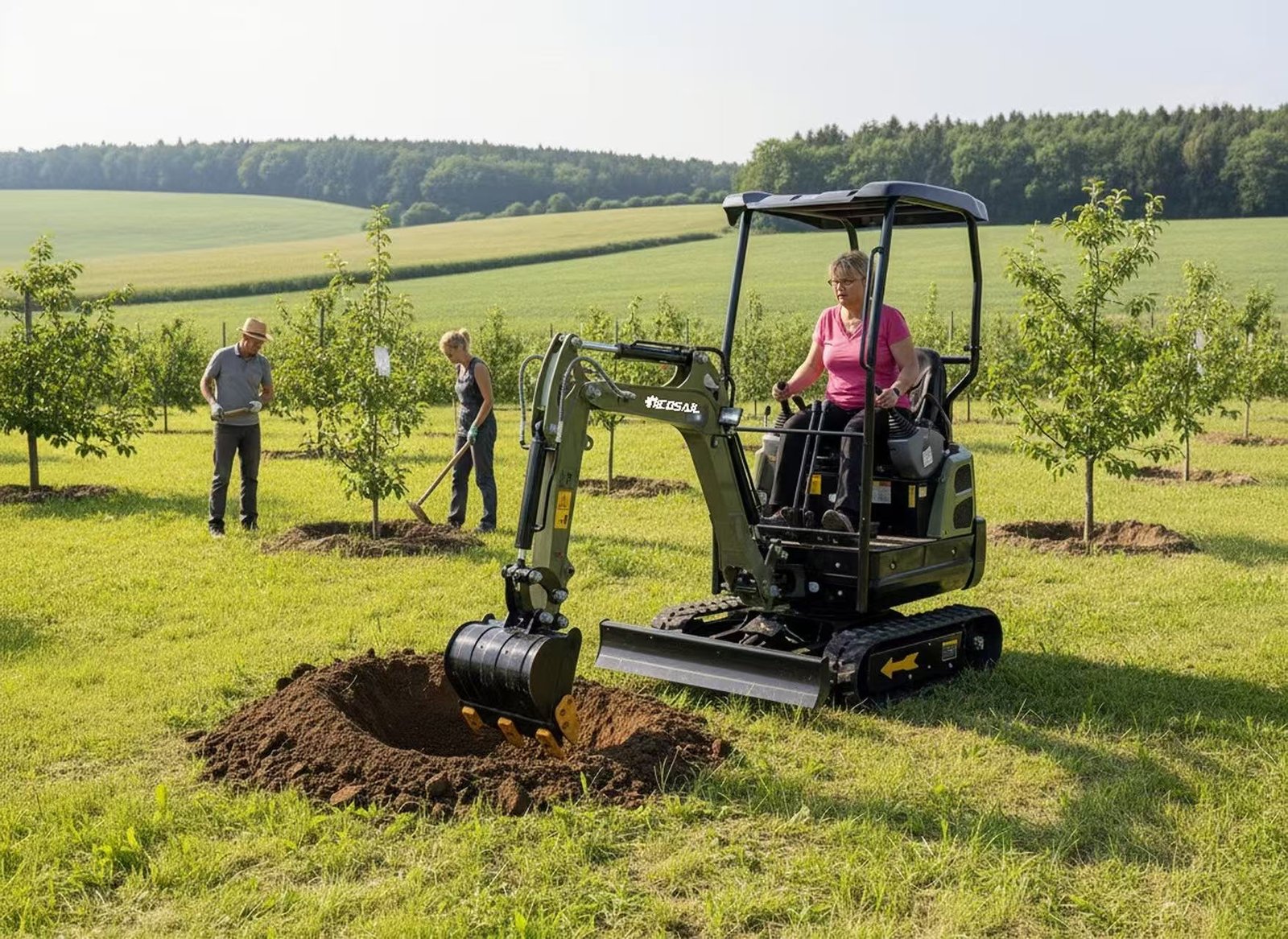
- Works well in gardens and farms
This matters a lot for residential clients who care more about their yard than speed.
4.3 Simple Operation = Lower Skill Requirement
Most 1 ton mini excavators:
- Use straightforward hydraulic systems
- Are easy to learn in one day
- Do not scare first-time operators
For rental companies, this is a huge advantage:
- Fewer breakdowns
- Fewer customer complaints
- Faster rental turnover
4.4 Lower Running Cost = Higher Profit
Fuel consumption is low.
Maintenance is simple.
Spare parts are affordable.
For small contractors and farmers, this means:
- The machine pays for itself faster
- No stress during off-season
5. Typical Jobs Where a 1 Ton Mini Excavator Shines
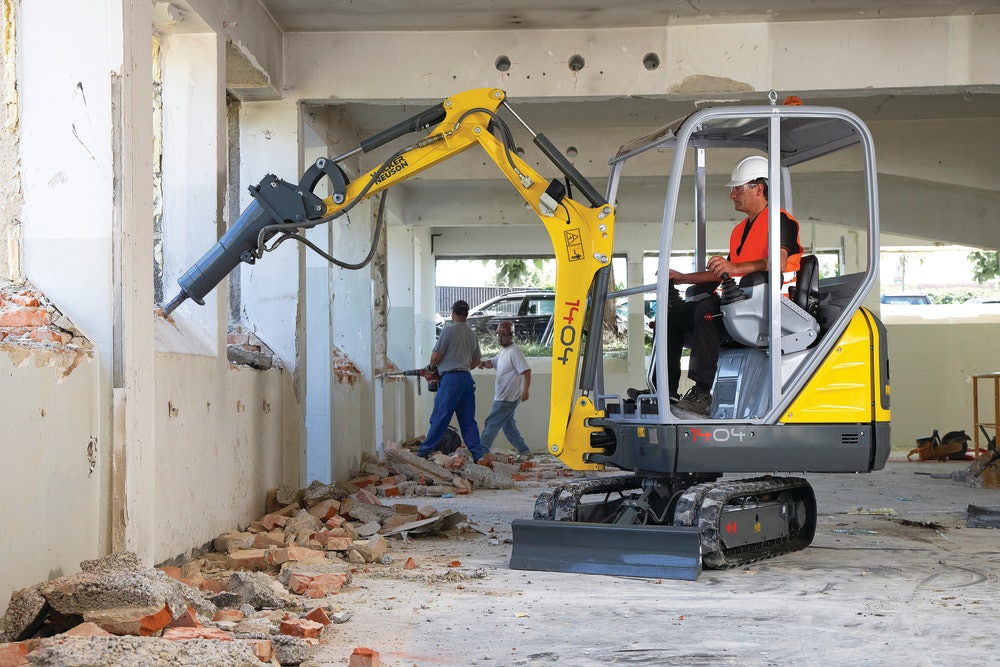
A 1 ton mini excavator is not a “toy.”
It is a problem-solver for specific jobs.
Common Applications:
- Backyard trenching
- Fence post digging
- Small foundation work
- Indoor demolition
- Garden landscaping
- Vineyard and orchard trenching
- Drainage installation
- Utility pipe laying
Many owners say the same thing:
“It’s not the biggest machine, but it’s the one used most often.”
6. Why More Buyers Are Choosing China-Made 1 Ton Mini Excavators
This question comes up all the time.
Why China?
6.1 Mature Manufacturing, Not Trial and Error
China has been producing mini excavators for over 20 years.
Good factories:
- Use stable supply chains
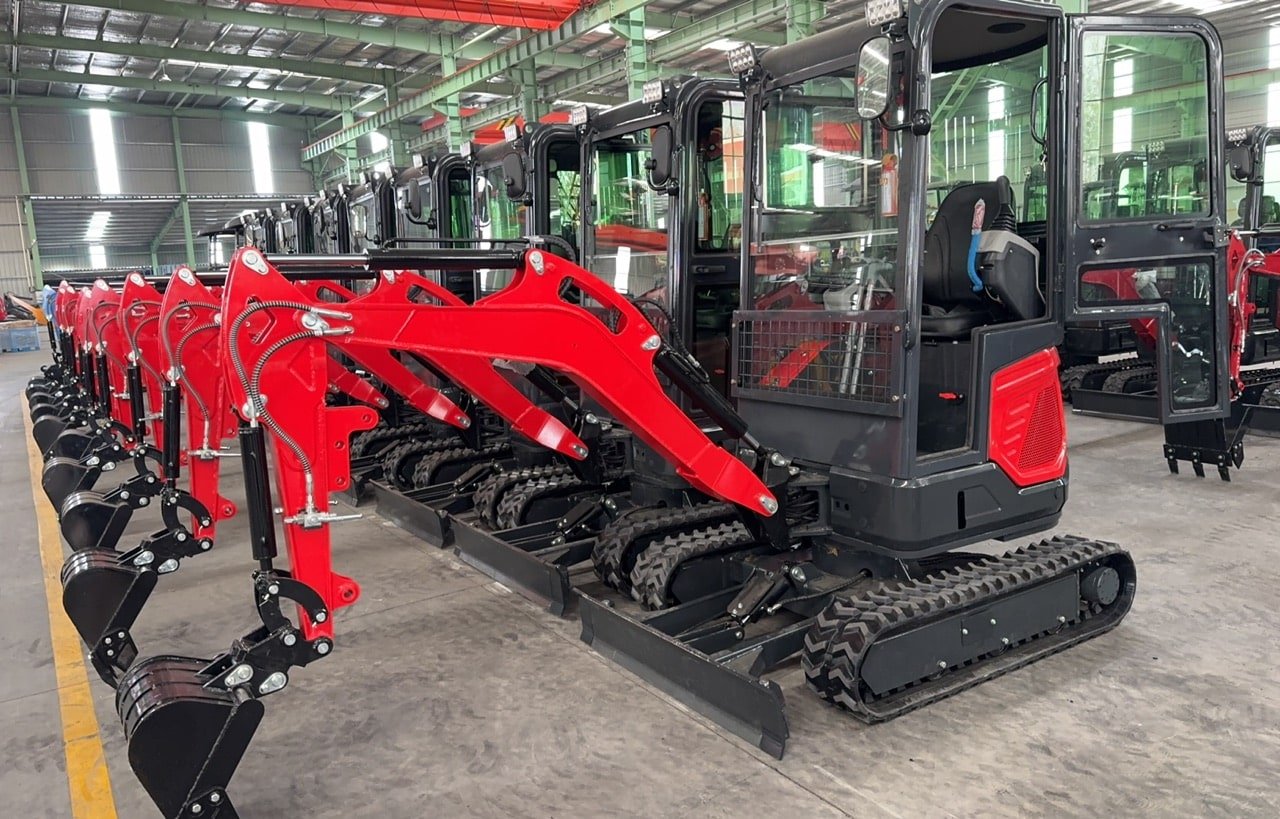
- Have standardized welding and assembly
- Test machines before shipment
The gap between Chinese machines and traditional brands has shrunk fast.
6.2 Price Advantage Without Cutting Corners
A China-made 1 ton mini excavator often costs:
- 30–50% less than Japanese or European brands
This does not mean lower value.
It means:
- Lower labor cost
- Localized parts sourcing
- Factory-direct pricing
For distributors and rental companies, margins are much healthier.
6.3 Easier Customization
Many Chinese factories allow:
- Custom colors
- OEM branding
- Different engines
- Optional attachments
This flexibility is hard to get from big global brands.
7. Common Worries Buyers Have — and the Real Answers
Worry 1: “Is the Quality Reliable?”
Quality depends on factory, not country.
Reliable factories focus on:
- Weld penetration
- Hydraulic hose routing
- Stable engine supply
- Pre-delivery testing
This is why buyers should never choose the cheapest offer blindly.
Worry 2: “What About Spare Parts?”
For 1 ton mini excavators:
- Parts are simple
- Many components are universal
- Shipping costs are low
Good suppliers prepare:
- Spare part lists
- Extra wear parts
- Clear manuals
Worry 3: “Will It Last Long Enough?”
A well-built 1 ton mini excavator can easily handle:
- 2,000–3,000 working hours
- Many years of light-to-medium duty work
The key is proper maintenance, not brand name.
8. How to Choose the Right 1 Ton Mini Excavator (Without Regret)
Here is a simple checklist buyers actually need.
8.1 Check the Width First
If it cannot enter the job site, stop right there.
8.2 Look at the Welding
Smooth welds are nice.
Strong welds are better.
8.3 Ask About Testing
A real factory tests:
- Hydraulics
- Travel motors
- Swing function
Before shipping, not after problems appear.
8.4 Confirm After-Sales Support
Even simple machines need support.
Clear communication matters more than fancy brochures.
9. Where Nicosail Fits In — A Practical Recommendation
Nicosail is not positioned as a luxury brand.
It focuses on:
- Stable configurations
- Practical design for narrow space work
- Export experience in Europe, North America, and Australia
For buyers who want:
- A reliable 1 ton mini excavator
- Factory-level communication
- Customization without chaos
Nicosail fits naturally — without overpromising or pushing unnecessary features.
It is the kind of choice buyers make after comparing many suppliers, not before.
10. FAQs Buyers Always Ask
Q1: Is a 1 ton mini excavator strong enough?
Yes, for narrow space and light-to-medium jobs, strength is not the issue — access is.
Q2: Can one person operate it easily?
Yes. Most operators feel comfortable after a few hours.
Q3: Is it good for rental business?
Very good. Low damage rate, high demand, easy maintenance.
Q4: How about transport?
One small trailer is usually enough. No special truck needed.
Q5: Is it better than a skid steer in narrow spaces?
For digging and trenching, yes. Excavators are more precise.
11. Final Summary: Is a 1 Ton Mini Excavator Worth It?
For narrow space work, the answer is very clear.
A 1 ton China mini excavator offers:
- Easy access
- Low operating cost
- High job flexibility
- Strong return on investment
It will not replace large excavators.
But it will replace frustration, wasted time, and missed jobs.
For contractors, farmers, rental companies, and distributors,
this small machine often becomes the most-used machine in the yard.
Choosing the right supplier matters.
Choosing the right size matters even more.
And in narrow spaces, 1 ton is often exactly right.