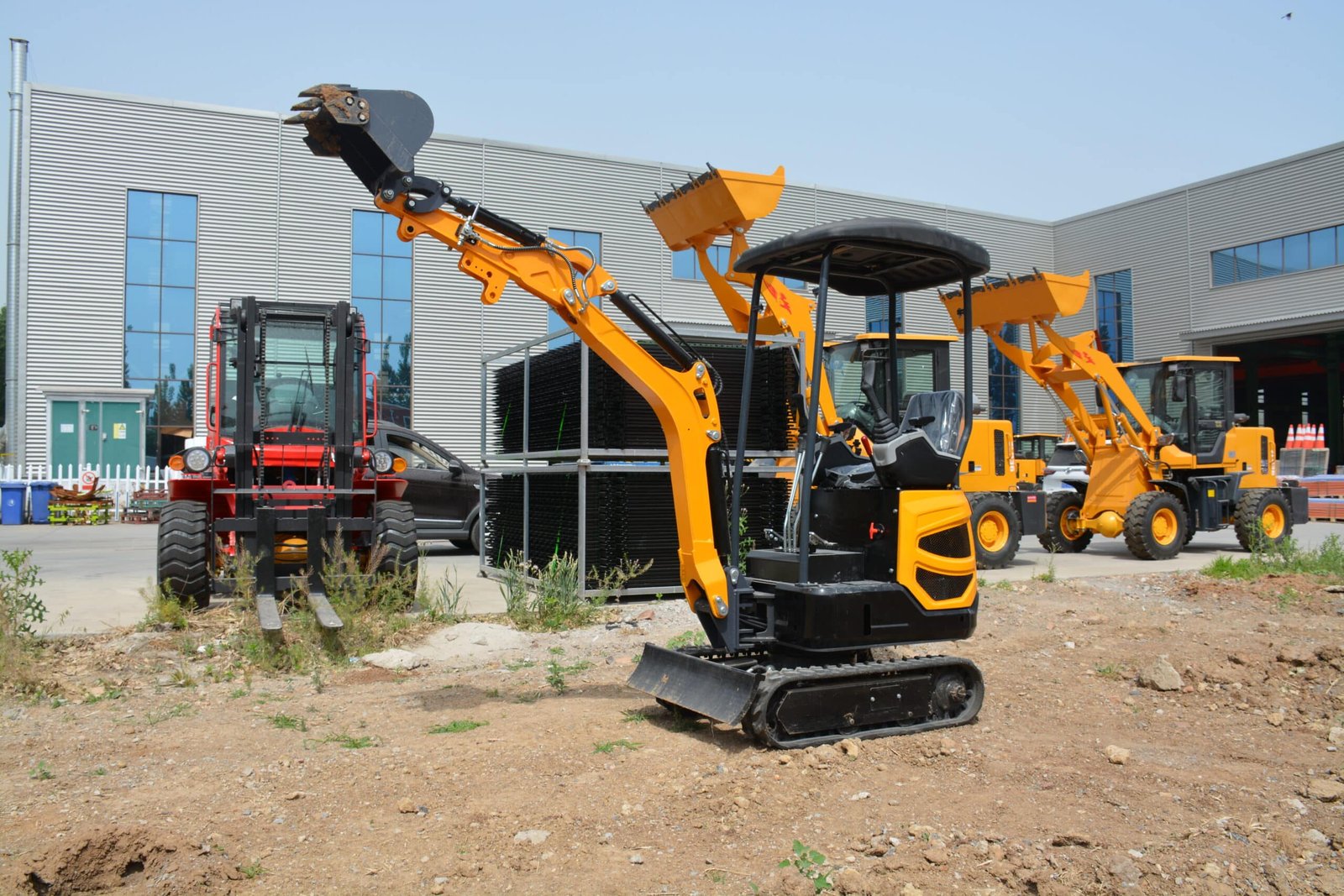
1) The real risks (and why most buyers miss them)
Buying small excavators (1–6 ton mini excavators) from China can be a smart move—price, availability, and customization are hard to beat. The problem is that most of the risk isn’t obvious on a showroom video.
The most common loss scenarios are usually one of these:
- Compliance mismatch: the machine arrives, but it can’t be legally sold or registered in the destination market (or it triggers costly rework).
- “Looks fine, fails early” reliability: leaks, overheating, electrical gremlins, premature wear—small issues that destroy resale value and customer trust.
- Delivery miss: shipment slips past peak season, or parts of the order show up damaged or incomplete.
- After-sales black hole: no parts pipeline, no real tech docs, slow response, and every small problem becomes expensive.
The buyers who do well don’t “trust harder.” They build a risk-control process that forces problems to show up early—while the supplier can still fix them cheaply.
2) Start with the end market: compliance decides everything
Before discussing price, paint color, or attachments, get one thing straight:
Where is the excavator going to be sold and used—EU, UK, US/Canada, Australia, or elsewhere?
Because compliance requirements drive engine configuration, labeling, documentation, and sometimes even safety structures and noise controls.
EU: Machinery safety + emissions
For the EU, machines must meet safety requirements under the Machinery Directive 2006/42/EC framework (and related requirements that apply to the configuration).
For emissions, the EU uses non-road mobile machinery (NRMM) rules under Regulation (EU) 2016/1628 (Stage V) for engines placed on the EU market.
Practical buyer takeaway:
Don’t accept “CE certificate” screenshots as proof. For machinery, what matters is a complete compliance package (think: Declaration of Conformity, manuals, labeling, and a technical documentation trail). If a supplier gets defensive when asked for a document list, that’s a warning sign.
US: EPA nonroad diesel requirements
In the US, excavators are covered under EPA rules for nonroad compression-ignition (diesel) engines, commonly associated with Tier standards (Tier 4 is a major modern benchmark).
Practical buyer takeaway:
The engine family, labels, and paperwork matter. If the machine is advertised as “EPA” but the engine plate doesn’t match, that becomes a customs-and-liability nightmare.
UK: UKCA labeling flexibility (timelines matter)
If the UK is a destination market, UKCA marking rules have had transitional arrangements and labeling flexibility in recent guidance. For example, the UK government guidance notes flexibility for placing the UKCA marking on labels or accompanying documents until 31 December 2027, with stricter expectations after that for many cases.
Practical buyer takeaway:
Don’t guess. Confirm what’s required for your product category and your sale date. Build compliance into the contract deliverables (documents + labels + manuals), not just a casual promise.
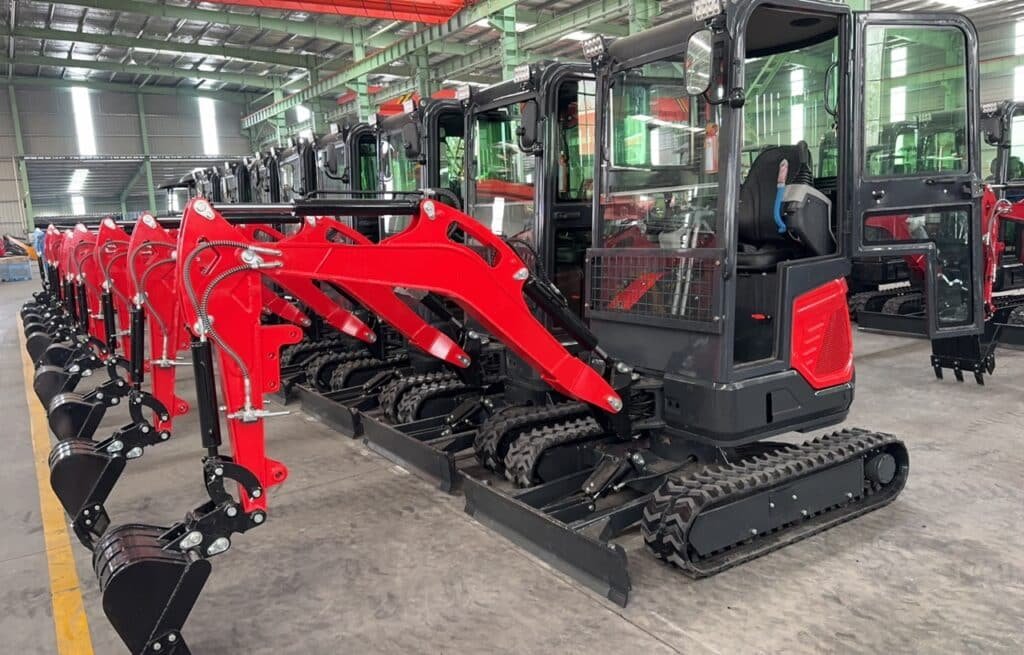
3) Supplier due diligence: how to tell a real factory from a “great-looking” middleman
There’s nothing wrong with trading companies if they add value and take responsibility. The risk is when a seller doesn’t control production and can’t fix root-cause quality issues.
What to verify (fast, practical checks)
Here’s a simple way to separate “sales-only” from “can actually deliver”:
A) Ask for production evidence that is hard to fake
- Live video walk-through of the workshop (not pre-recorded)
- Serial number system explanation (how they track frames/engines)
- Incoming inspection area (engines, pumps, valves, hoses)
- End-of-line test area (function test, leak checks)
B) Ask for process documents, not marketing
- Inspection checklist used on the line (not a brochure)
- Welding procedure control approach (at least: how welders are qualified and how critical welds are checked)
- Paint pretreatment steps (rust protection is a huge “invisible” differentiator)
C) Ask “who owns the warranty?”
If something leaks in month 3, who ships parts, who pays labor, who responds in 24–48 hours?
Why a multi-line factory tends to be safer
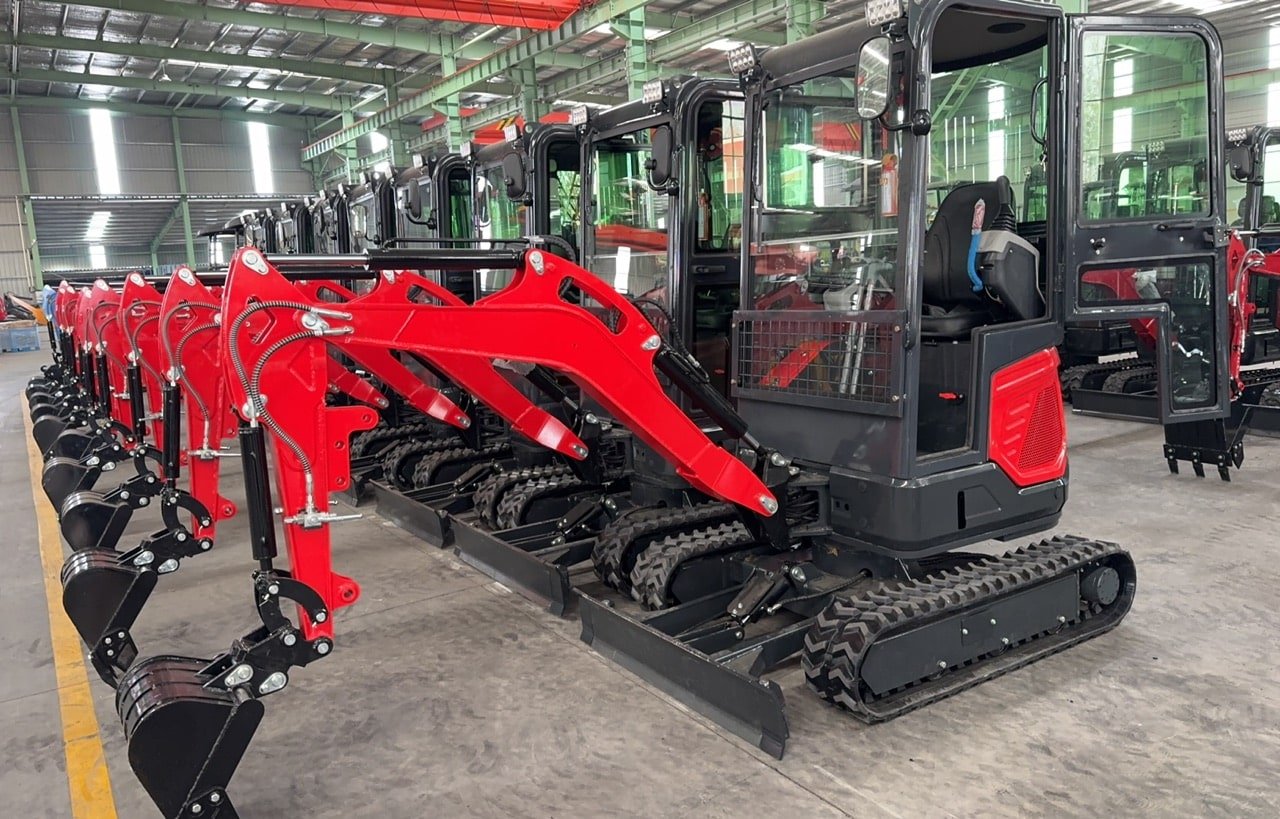
A factory with multiple production lines is often more stable on delivery and consistency because:
- staffing is less “one team = one bottleneck”
- parts sourcing is more standardized
- internal test routines are more repeatable
This is also why brands like Nicosail (with factory production capacity and customization options) tend to be easier to manage for long-term programs: the buying side can push for consistent inspection gates, stable BOM control, and documented change management—without turning every order into a one-off experiment.
(That’s not a “pick this brand” pitch—just a reality: process control beats pretty photos.)
4) Lock the spec: stop “same model” surprises before they happen
Many disputes happen because “1.8 ton excavator” is not a spec. It’s a category.
Use a “frozen configuration sheet” (non-negotiable)
Before deposit payment, freeze these items in writing:
Machine core
- Operating weight range and track width
- Boom/arm length, bucket cylinder specs
- Travel motor type + swing motor type
- Main pump type (gear vs piston) if applicable for the model
Hydraulics
- Valve brand/model (or approved equivalent list)
- Hose standard and protection (sleeves, clamps, routing)
- Auxiliary hydraulic flow/pressure targets for attachments
Engine
- Exact engine model + emission configuration for destination market
- Cooling package configuration (radiator/oil cooler layout)
Electrical
- Harness connector standard, fuse/relay layout
- Battery spec, alternator spec
Cab/canopy safety
- ROPS/TOPS configuration if required for your market
- Seatbelt, interlocks, emergency stop behavior
Attachments
- Quick coupler standard
- Bucket pin size, center distance, stick width
- Included spare teeth/pins/filters list
Control “equivalent substitution”
If the supplier says “same quality, different brand,” that can be okay—only if:
- equivalent list is pre-approved
- substitutions require written approval
- substitutions are recorded on the final packing list / QC report
If substitutions are allowed casually, buyers end up with “two machines that look the same but behave differently,” which is brutal for dealers and rental fleets.
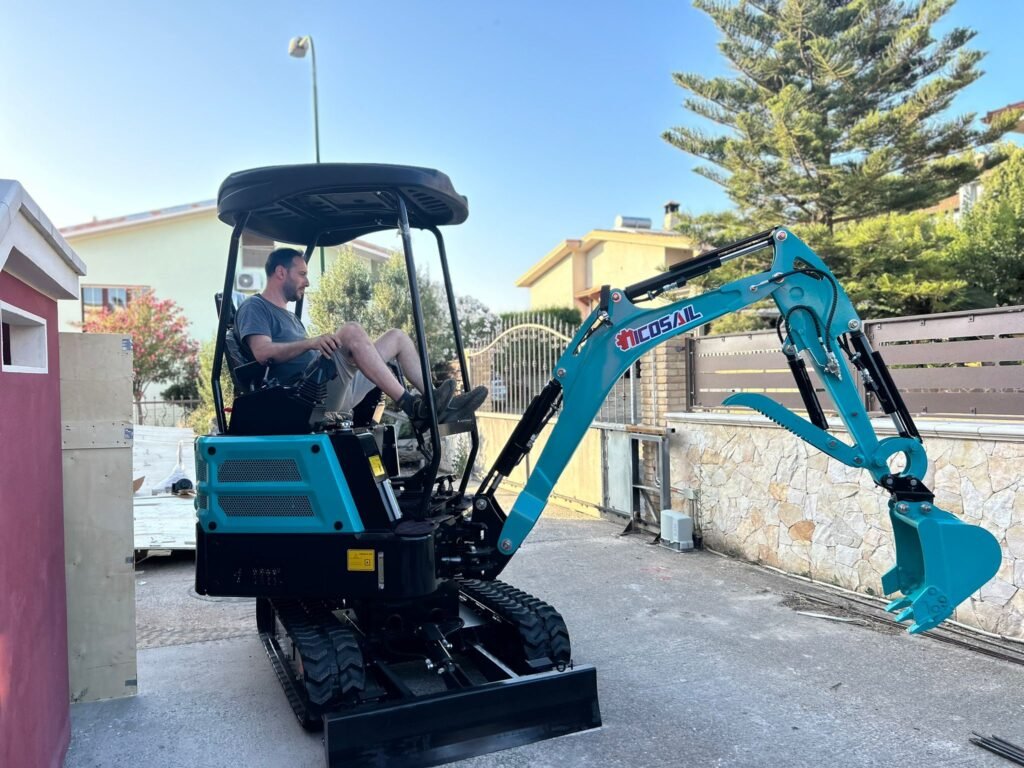
5) Quality control that actually works: the 3-inspection method
A single pre-shipment inspection is better than nothing, but it’s not enough for excavators because many issues are built into the machine long before it’s running.
A practical approach is 3 gates:
Gate 1: Frame & weld inspection (early stage)
This is where long-term durability starts.
Check:
- boom/arm critical weld areas (clean bead, no undercut, no obvious porosity)
- boom foot and arm base alignment
- slew ring mounting surface cleanliness and bolt torque process evidence
Why it matters:
If the structure is off, nothing else “tunes” it back. Later fixes become cosmetic.
Gate 2: Hydraulic + hose routing inspection (mid stage)
This is the #1 place where “cheap becomes expensive.”
Check:
- hose routing away from sharp edges and pinch points
- clamp spacing and protective sleeves at rub zones
- clean hydraulic assembly practices (caps used, lines kept clean)
Quick field rule:
If hoses can rub, they eventually will. And if they burst, they don’t burst at convenient times.
Gate 3: End-of-line functional test (final stage)
Don’t accept “it runs.” Require a recorded test routine.
Check:
- cold start behavior and idle stability
- boom/arm/bucket smoothness (no jerky valve behavior)
- travel straightness, slope behavior if possible
- swing brake/hold performance
- leak inspection after warming up (many leaks appear only after heat + pressure cycling)
Tip that saves money:
Require the supplier to run the machine long enough to reach operating temperature, then do a second leak check. A 10-minute run can hide what a 45-minute run exposes.
Who should inspect?
- For small trial orders: a trusted third-party inspector can work.
- For program purchasing: build a supplier-specific checklist that mirrors your after-sales pain points.
6) Contract + payment terms that reduce risk (without killing the deal)
A good contract isn’t about being aggressive—it’s about being clear.
Key clauses that actually protect the buyer
A) Acceptance standard
Define acceptance by:
- configuration sheet match
- inspection checklist pass
- document set completeness (manuals, labels, declarations, packing list, etc.)
B) Delivery date definition
Specify:
- “ready for shipment” date
- what counts as delay (missing documents, missing parts, not just “not on vessel”)
C) Warranty scope
Spell out:
- warranty period and what’s covered (pump, valve, travel motor, swing motor, electrical)
- parts shipment response time (example: 48–72 hours)
- who pays freight for warranty parts
D) Spare parts package
For small excavators, a starter kit prevents 80% of early disputes:
- filters set (oil, fuel, hydraulic)
- common seals, O-rings
- a few hoses in common lengths (or at least hose end fittings)
- bucket teeth, pins, clips
- belts, sensors (depending on engine)
Payment structure that reduces risk
Common structures that reduce friction:
- 30/70 (deposit + balance after inspection)
- balance payment tied to passed inspection report + document handover
- for large orders: consider LC terms only if both sides know how to execute without delays
Avoid paying the full balance before:
- inspection pass
- serial numbers confirmed
- packing list finalized
- compliance docs ready (if required)
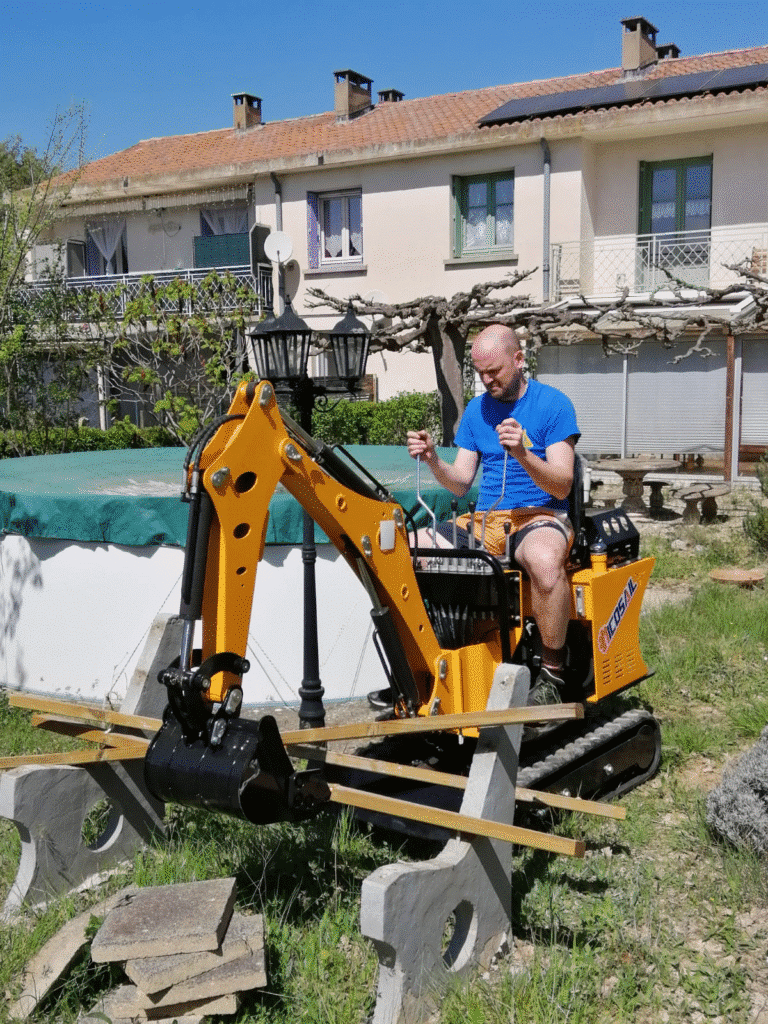
7) Shipping and delivery risk: containers, timelines, and damage claims
Small excavators are usually container-shipped, and shipping risk is very real.
What to require for container loading
- photos/video of loading process
- proper blocking and bracing (prevent track movement)
- corrosion protection for sea shipping (especially for machines sitting at port)
- accessory/attachment packing list (so nothing “vanishes”)
Timeline risk control (the “peak season” problem)
If missing the selling season is a major financial hit:
- set an internal “latest ship date” buffer (not the final customer deadline)
- place engine and key hydraulic components under early reservation
- require weekly production updates with photos and serial tracking
8) After-sales and spare parts: the part most buyers under-invest in
For dealers, importers, rental fleets, and contractors, after-sales capability is not optional.
The minimum after-sales package worth demanding
- parts book (with part numbers that match the machine you received)
- service manual (basic procedures, fluids, greasing points, torque notes)
- wiring diagram + hydraulic schematic (even simplified versions help a lot)
- remote troubleshooting response process (who answers, how fast, what info is needed)
Parts availability: avoid the “one container, then silence” trap
Ask:
- Are pumps/valves/motors standardized across models?
- Are hoses made in-house or sourced? Can replacements be shipped fast?
- Are there parts warehouses or partner stock points for your region?
Brands that support structured after-sales (including a predictable spare parts program) reduce total cost even if the purchase price is slightly higher. This is where a factory-backed brand like Nicosail is often easier to scale with—because repeat orders need repeatable parts and documentation, not “custom every time.”
9) Certificate and document fraud: simple ways to verify
Document fraud usually isn’t a buyer getting tricked by a genius scam. It’s a buyer being rushed and accepting screenshots.
Simple verification habits that work
- Require high-resolution photos of the engine plate and emission labels (not PDF-only)
- Confirm the engine model matches the invoice and packing list
- Request the full document set early (drafts before production ends)
- Spot-check consistency: company name, address, model number, serial number format
Watch for these red flags
- “CE certificate” that looks like a generic template with no clear machine identification
- mismatched company name between invoice and compliance documents
- unwillingness to provide manuals and labeling samples
- “EPA” claims without clear engine identification and traceability to the engine family paperwork approach under EPA nonroad rules
10) A practical “go/no-go” scorecard
This helps buyers avoid emotional decisions (price excitement is real).
Score each category 0–5:
- Compliance fit (docs + labels + correct engine config)
- Factory control (traceability, inspection gates, process evidence)
- Configuration clarity (frozen spec sheet, substitution control)
- Inspection system (Gate 1–3 supported, test routine recorded)
- Delivery reliability (timeline visibility, loading controls)
- After-sales (parts list, manuals, response speed, starter parts kit)
- Commercial terms (fair warranty, inspection-linked balance payment)
If any of these are 0–1, the supplier isn’t ready for program purchasing—no matter how good the price looks.
FAQs
1) Is it safe to buy small excavators from China?
Yes—if the purchase is run like a controlled project: end-market compliance confirmed, specs frozen, inspection gates used, and parts/warranty handled clearly. The risk comes from vague specs, weak documents, and skipping inspections.
2) What’s the biggest mistake importers make?
Treating it like a “sample + shipment” deal instead of a system. The biggest losses come from compliance mismatches and after-sales gaps, not from obvious cosmetic defects.
3) Do third-party inspections solve everything?
They help a lot, but they don’t fix a weak process. The best results come from multiple inspection gates plus a supplier who is willing and able to correct root causes.
4) What should be included in a spare parts starter kit?
At minimum: filters, seals/O-rings, common wear parts (teeth/pins), and a small set of high-failure electrical items (depending on model). For dealers and rental fleets, add hoses or at least hose end fittings.
5) How can a buyer avoid “same model, different parts” problems?
Use a frozen configuration sheet and control substitutions. “Equivalent brand” must be pre-approved and recorded. Without this, servicing becomes chaotic.
6) Are CE/UKCA/EPA claims enough to trust the machine?
Claims aren’t enough—buyers should require the correct document package, consistent labeling, and traceability that matches the shipped machine. For the EU and US, the underlying regulatory frameworks are well-defined.
Summary
Minimizing risk when purchasing small excavators from China is not about finding a “perfect” supplier. It’s about building a repeatable control system:
- Confirm destination-market compliance first (EU/UK/US rules drive configuration).
- Verify the supplier’s real production and QC capability (traceability beats marketing).
- Freeze the configuration sheet and control substitutions.
- Use three inspection gates (structure → hydraulics → end-of-line test).
- Tie payments to inspection results and complete documentation.
- Plan shipping protection and timeline buffers.
- Invest in after-sales: parts, manuals, and response speed decide long-term success.
For buyers who want smoother execution—especially dealers, importers, and rental operators—working with a factory-backed brand that supports standardized production, documentation, and parts planning (such as Nicosail) usually reduces total risk and total cost over time, even when the initial quote isn’t the absolute lowest.